
Brake pads are one of the most important safety components of your vehicle. They play a critical role in stopping your car efficiently and preventing accidents. Yet, many drivers are unsure how often brake pads should be changed or when brake pad replacement becomes necessary.
Table of Contents
How Often Should Brake Pads Be Changed?
On average, brake pad replacement is needed every 30,000 to 70,000 miles. However, this range can vary widely depending on several factors such as driving habits, vehicle type, and road conditions.
Because brake pad wear differs from one driver to another, regular inspections are essential. Ignoring worn brake pads can lead to brake failure and damage to other braking components.
Factors That Affect Brake Pads Replacement Frequency
- Driving Habits
Aggressive driving—such as frequent hard braking—causes brake pads to wear out faster. City driving with constant stop-and-go traffic often leads to more frequent brake pad replacement than highway driving. - Vehicle Type and Weight
Heavier vehicles like SUVs and trucks place more stress on brake pads, reducing their lifespan. Performance cars may also require brake pad replacement more often due to high braking demands. - Brake Pad Material
Different brake pad materials wear differently:
1. Organic brake pads wear faster but are quieter
2. Semi-metallic brake pads last longer but may produce more noise
3. Ceramic brake pads offer the longest lifespan with consistent performance - Road and Weather Conditions
Driving in hilly areas, dusty environments, or extreme weather conditions can accelerate brake pad wear and increase the need for replacement.
Signs You Need Brake Pad Replacement
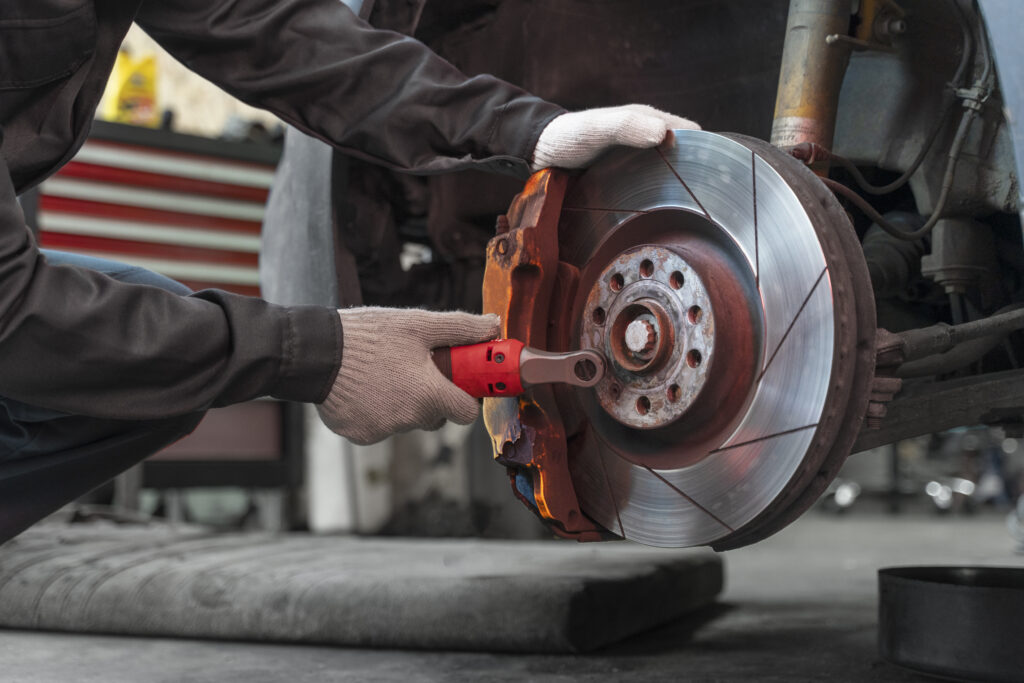
Knowing the warning signs can help you avoid costly repairs and unsafe driving conditions. Common indicators include:
1. Squealing or grinding noises when braking: Squealing is often caused by a small metal shim (called a wear indicator) built into brake pads. When pads get thin, this shim makes a high-pitched squeal to alert you. Grinding is a harsher sound that usually means the pads are completely worn down, and the metal backing plate is contacting the rotor. This can quickly damage rotors and lead to costly repairs.
2. Reduced braking performance: If your car takes longer to stop or the brakes feel less responsive, worn pads may be the culprit. This increases stopping distance, which is dangerous in emergencies. Sometimes, reduced performance is also linked to uneven pad wear, which can compromise stability when braking.
What Happens If You Delay Brake Pad Replacement?
Delaying brake pad replacement can lead to serious consequences, including:
1. Damage to brake rotors
2. Increased stopping distance
3. Higher repair costs
4. Increased risk of brake failure
Replacing brake pads early is far more affordable than repairing damaged rotors or calipers caused by excessive wear.
How Often Should Brake Pads Be Checked?
Even if replacement isn’t immediately necessary, brake pads should be inspected every 10,000 to 15,000 miles or during routine vehicle servicing. Regular inspections help identify uneven wear and allow for timely brake pad replacement before major issues arise.
Professional Brake Pad Replacement vs DIY
While some experienced drivers attempt DIY brake pad replacement, professional servicing ensures:
1. Correct installation
2. Proper brake system inspection
3. Improved safety and performance
Professional brake pad replacement also helps detect related issues such as worn rotors or brake fluid problems.
Final Thoughts on Brake Pads Replacement
So, how often should your brake pads be changed? While mileage estimates provide a guideline, the safest approach is regular inspection and timely brake pad replacement when wear signs appear.
Staying proactive with brake maintenance not only improves vehicle safety but also reduces long-term repair costs. If you want optimal braking performance, never ignore the early signs—your safety depends on it.
If you have any questions, you can ask our mechanics on a live chat here or download our mobile app from Apple AppStore and Google Playstore. You can also download our G-OBD AI Diagnostics App on Playstore here.
Leave a Reply