
When it comes to vehicle safety and electrical reliability, one of the most overlooked components is the fuse. Drivers often ask: how many fuses are in a car? The answer depends on the make, model, and year of your vehicle, but understanding the role of fuses and their placement can help you troubleshoot electrical problems and keep your car running smoothly.
Table of Contents
The Role of Fuses in a Car
Fuses act as protective devices for your vehicle’s electrical circuits. Whenever there’s an overload or short circuit, the fuse breaks the connection, preventing damage to wiring and expensive components. Without these small but powerful devices, even minor electrical issues could lead to major failures or fire hazards.
Every modern car relies heavily on electronics—from headlights and radios to advanced driver‑assistance systems. Each of these systems requires protection, and that’s where fuses come in. They are designed to fail safely, sacrificing themselves to protect the rest of the system.
How Many Fuses Are Typically in a Car?
Most modern vehicles contain 20 to more than 50 fuses in a car, depending on how many electrical systems are installed. Basic models may have fewer fuses, while luxury or high‑tech vehicles with advanced electronics can have dozens more.
For example:
- Compact cars may have around 20–30 fuses.
- Mid‑size sedans and SUVs often contain 30–40 fuses.
- Luxury vehicles or those with advanced infotainment and safety systems may have 50 or more.
These fuses are usually divided between two or more fuse boxes.
Typical Fuse Box Locations
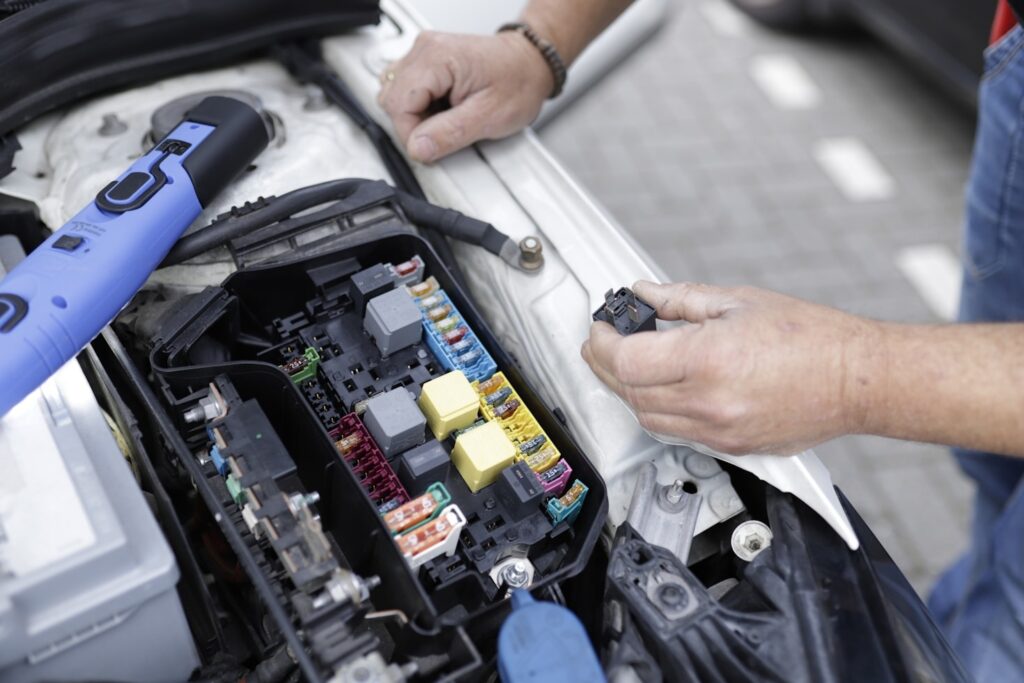
Most vehicles have at least two fuse boxes:
- Interior Fuse Box – Located under the dashboard or near the steering wheel. It protects systems like lights, radios, power windows, and seat controls.
- Engine Compartment Fuse Box – Found under the hood. It safeguards critical components such as the alternator, cooling fans, ignition system, and fuel pump.
Some vehicles may also have additional fuse panels for specialized systems, such as rear entertainment units or advanced driver‑assistance features.
Why Knowing the Number of Fuses Matters
Understanding how many fuses in a car has and where they are located is important for several reasons:
- Troubleshooting Electrical Issues – If a system suddenly stops working, checking the fuse is often the first step.
- Preventing Costly Repairs – Replacing a blown fuse is inexpensive compared to repairing damaged wiring or components.
- Maintaining Safety – Fuses protect against overheating and electrical fires, making them essential for safe driving.
By knowing where your fuses are and how many your car contains, you can quickly identify and fix minor issues before they escalate.
Signs of a Blown Fuse
Even if you know how many fuses your car has, it’s equally important to recognize when one has failed. Common signs include:
- Electrical components suddenly stop working.
- No power to certain systems despite a healthy battery.
- Visible damage inside the fuse, such as a broken strip or burn marks.
Checking fuses is straightforward. Most fuse boxes have a diagram showing which fuse controls which system. By pulling out the suspect fuse and inspecting it, you can confirm whether it has blown.
How to Replace a Fuse
Replacing a fuse is one of the simplest car maintenance tasks:
- Locate the fuse box (interior or engine compartment).
- Use the diagram to identify the correct fuse.
- Pull out the fuse with a fuse puller or needle‑nose pliers.
- Inspect the fuse—if the metal strip inside is broken, it has blown.
- Replace it with a new fuse of the same amperage rating.
Never replace a fuse with one of a higher rating, as this can allow too much current to flow and damage the system.
Preventive Maintenance for Fuses
While fuses are designed to fail safely, you can reduce the risk of electrical problems by:
- Avoiding overloading circuits with aftermarket accessories.
- Using manufacturer‑approved electrical components.
- Inspecting fuse boxes periodically for corrosion or moisture.
- Keeping spare fuses in your glove compartment for emergencies.
Common Myths About Car Fuses
- “A blown fuse means the car is unsafe.” Not necessarily. A blown fuse simply indicates that a circuit was overloaded. Replacing it usually restores function.
- “All cars have the same number of fuses.” The number varies widely depending on the vehicle’s design and features.
- “You can use any fuse as a replacement.” Incorrect. Always use the correct amperage rating specified by the manufacturer.
Final Thoughts
So, how many fuses in a car? While the exact number varies by vehicle, most cars contain dozens of fuses spread across multiple fuse boxes. These small components play a big role in protecting your electrical systems, ensuring safety, and preventing costly damage.
By understanding their importance, knowing how to check them, and recognizing the signs of a blown fuse, you can keep your vehicle reliable and road‑ready. Whether your car has 20 fuses or 50, each one is essential for maintaining performance and safety.
If you have any questions, you can ask our mechanics on a live chat here or download our mobile app from Apple AppStore and Google Playstore. You can also download our G-OBD AI Diagnostics App on Playstore here.
Leave a Reply