
Car brake pads are one of the most important safety components in your vehicle. When they wear out or become faulty, your car’s ability to stop safely is compromised. Knowing how to fix car brake pads—or when to replace them—can help you maintain optimal braking performance and avoid costly repairs.
What Are Car Brake Pads and Why Are They Important?
Car brake pads are friction materials that press against the brake rotors when you apply the brakes. This friction slows down or stops your vehicle. Over time, brake pads wear out due to constant use, making regular inspection and maintenance very essential.
Faulty or worn car brake pads can lead to:
- Longer stopping distances
- Squealing or grinding noises
- Damage to brake rotors
- Increased risk of accidents
Common Problems With Car Brake Pads
Before fixing car brake pads, it’s important to identify the issue. Common brake pad problems include:
- Worn-out brake pads – The friction material is too thin
- a. What happens: Brake pads are layers of friction material bonded to a metal backing plate. As you brake, that friction material wears away. When pad thickness falls below about 3 mm, braking performance drops and metal‑to‑metal contact can occur.
- b. Why it matters: Thin pads increase stopping distance, risk rotor damage, and can trigger ABS or brake warning lights.
- c. How to check: Remove the wheel or look through the caliper opening; measure pad lining thickness. Replace pads if under 3 mm or if the wear indicator is contacting the rotor.
- Uneven wear – Often caused by stuck calipers
- a. Typical pattern: One pad (inner or outer) is significantly thinner than its counterpart on the same wheel. This causes the car to pull to one side under braking.
- b. Common causes: Sticking or seized caliper pistons or slide pins, corroded hardware, warped rotors, or improper installation. A stuck caliper keeps pressure on one pad so it wears faster.
- c. What to do: Inspect caliper movement, clean and lubricate slide pins, check piston retraction, and replace corroded hardware. If the caliper is seized, replace or rebuild it.
- Brake noise – Squealing or grinding when braking
- a. Squeal (high‑pitched): Often caused by pad wear indicators, glazed pads, or light vibration between pad and caliper. Squeal can be an early warning before serious damage.
- b. Grinding (metallic): Indicates the friction material is gone and the backing plate is contacting the rotor—this can score or ruin the rotor and requires immediate attention.
- c. Fixes: Replace worn pads, clean pad/rotor surfaces, apply anti‑squeal shims or lubricant where appropriate, and resurface or replace rotors if damaged.
- Vibration when braking – May indicate worn pads or rotors
- a. Symptoms: Pulsation through the brake pedal or steering wheel during braking.
- b. Causes: Warped or uneven rotors, uneven pad deposits (glazing), or uneven pad wear. Heat cycles, heavy loads, and aggressive braking in urban traffic accelerate rotor distortion.
If you notice any of these signs, your car brake pads need immediate attention.
Can You Fix Car Brake Pads or Do They Need Replacement?
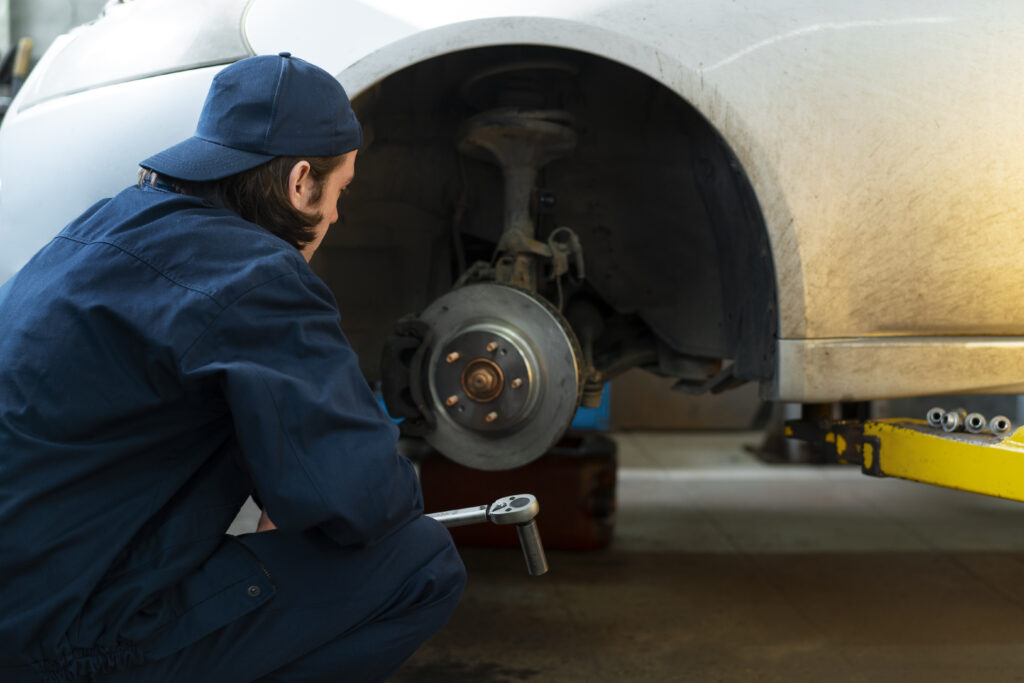
In most cases, car brake pads cannot be repaired they must be replaced once worn. However, minor issues like noise caused by dust buildup or improper installation can sometimes be fixed without full replacement.
If the brake pads are thin, cracked, or damaged, replacement is the safest option.
How to Fix Car Brake Pads: Step-by-Step
Step 1: Inspect the Brake Pads
Remove the wheel and visually inspect the brake pads. If the pad thickness is less than 3mm, replacement is necessary.
Step 2: Remove the Old Brake Pads
Loosen the caliper bolts and carefully remove the caliper. Slide out the worn car brake pads.
Step 3: Check the Brake Rotor
Inspect the rotor for grooves or damage. Worn rotors may need resurfacing or replacement before installing new brake pads.
Step 4: Install New Brake Pads
Insert the new brake pads into the caliper bracket. Ensure they are properly aligned and seated correctly.
Step 5: Reassemble and Test
Reattach the caliper, tighten all bolts, reinstall the wheel, and test the brakes at low speed to ensure proper function.
Tools Needed to Fix Car Brake Pads
- Jack and jack stands
- Lug wrench
- Socket set
- Brake cleaner
- New car brake pads
Having the right tools ensures safe and correct installation.
When Should You Fix or Replace Car Brake Pads?
Car brake pads should typically be replaced every 30,000 to 70,000 miles, depending on driving habits and conditions. Regular inspections help detect issues early and prevent brake system damage.
Why Professional Service Matters for Car Brake Pads
While DIY brake pad replacement is possible, professional servicing ensures:
- Proper installation
- Correct torque settings
- Full brake system inspection
This reduces the risk of brake failure and extends the life of your braking system.
Final Thoughts on Fixing Car Brake Pads
Understanding how to fix car brake pads starts with knowing when they need replacement. While minor brake issues can sometimes be corrected, worn car brake pads should always be replaced promptly for safety.
Regular maintenance and timely replacement of car brake pads will improve braking performance, protect other brake components, and keep you safe on the road.
If you have any questions, you can ask our mechanics on a live chat here or download our mobile app from Apple AppStore and Google Playstore. You can also download our G-OBD AI Diagnostics App on Playstore here.
Leave a Reply