
Modern vehicles produce a constant stream of real-time sensor information, but experienced mechanics don’t scroll through endless data lists. They focus on a small group of live data parameters that quickly expose how an engine is actually performing.
While many technicians rely heavily on trouble codes, codes alone rarely tell the full story. Live data allows mechanics to confirm root causes, detect developing issues early, and avoid unnecessary parts replacement. Among the most valuable — and often overlooked — is Mode $06 misfire data.
Here are the five live data parameters professional mechhttps://askamechanic.asoroautomotive.com/anics check first and how each one directly influences accurate diagnosis.
Table of Contents
1. Mode $06 Misfire Data
Mode $06 is one of the most powerful diagnostic tools available on modern scanners. Instead of waiting for a misfire code to trigger, Mode $06 displays raw onboard test results, including cylinder-specific misfire counts.
This allows mechanics to detect early signs of trouble before a check engine light appears.
Mode $06 misfire data is critical for diagnosing:
- Intermittent misfires
- Weak ignition coils
- Fuel injector imbalance
- Compression or mechanical issues
A cylinder that consistently shows higher misfire counts than others immediately narrows the diagnostic path. This prevents guesswork and speeds up pinpoint testing.
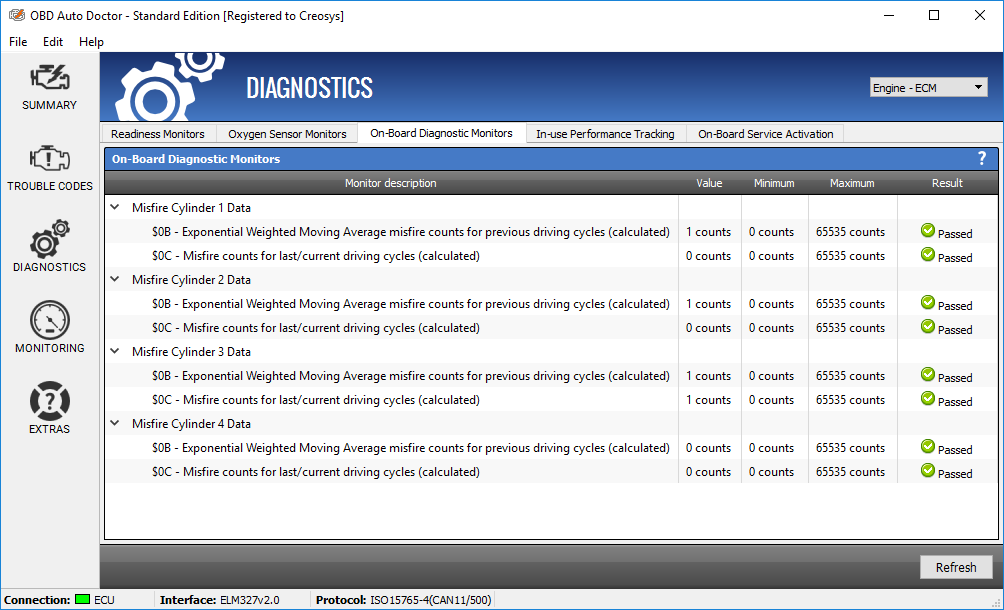
Seeing live misfire data change under idle and load conditions adds visual proof to the diagnosis and increases confidence in repair decisions.
2. Fuel Trim (Short-Term and Long-Term)
Fuel trim is one of the most revealing live data parameters because it shows how the engine control module is adjusting the air-fuel mixture in real time.
Short-term fuel trim reacts instantly to sensor feedback, while long-term fuel trim reflects ongoing corrections. Extreme positive or negative values signal underlying system imbalances.
Fuel trim data helps mechanics identify:
- Vacuum leaks
- Fuel delivery restrictions
- Sensor inaccuracies
- Airflow measurement issues
When fuel trim readings are analyzed alongside Mode $06 misfire data, technicians can quickly determine whether a misfire is fuel-related or ignition-related.
This combination of data dramatically improves diagnostic accuracy.
3. Oxygen Sensor Activity
Oxygen sensor live data provides insight into combustion efficiency and mixture control. A healthy upstream oxygen sensor should switch rapidly between rich and lean conditions.
Slow or flat sensor activity often indicates:
- Aging oxygen sensors
- Fuel mixture problems
- Exhaust system issues
Comparing oxygen sensor switching with fuel trim behavior confirms whether the engine is responding properly to changing operating conditions.
Visualizing sensor activity helps mechanics verify whether the system is functioning as expected.
4. Engine Coolant Temperature
Coolant temperature plays a major role in engine management. Incorrect readings can cause poor fuel economy, drivability issues, and emissions problems.
Monitoring this live data parameter helps diagnose:
- Stuck thermostats
- Faulty temperature sensors
- Cooling system inefficiencies
An engine running too cool may stay in open loop operation, while overheating can lead to performance loss and long-term damage.
Tracking temperature during warm-up provides valuable diagnostic clues.
5. Throttle Position and Engine Load
Throttle position shows how driver input translates into engine response. Combined with engine load data, it helps diagnose hesitation, lag, or inconsistent acceleration.
Irregular throttle signals may suggest:
- Electronic throttle body issues
- Sensor calibration faults
- Wiring or control problems
When correlated with RPM and misfire data, throttle readings complete the diagnostic picture.
This real-time visualization confirms whether the engine responds smoothly to input.
Why These Live Data Parameters Matter
No single parameter provides a complete answer. Accurate diagnosis comes from interpreting multiple live data parameters together and recognizing patterns.
By focusing on these five areas, mechanics can:
- Detect developing problems before codes appear
- Confirm root causes instead of guessing
- Reduce unnecessary repairs
- Improve efficiency and credibility
Mode $06 misfire data adds an advanced diagnostic layer that many general repair guides overlook, making it especially valuable for in-depth troubleshooting.
Conclusion
Mastering key live data parameters transforms the way mechanics diagnose vehicles. Mode $06 misfire data, fuel trim, oxygen sensor activity, coolant temperature, and throttle position form a powerful foundation for accurate troubleshooting.
When supported by real scanner screenshots, these parameters provide both technical clarity and visual credibility. For modern diagnostics, live data is not optional — it is essential.
If you have any questions, you can ask our mechanics on a live chat here or download our mobile app from Apple AppStore and Google Playstore. You can also download our G-OBD AI Diagnostics App on Playstore here.
Leave a Reply